
PEMF for Sleep: Can It Help You Sleep Better?
PEMF for Sleep: Can It Help You Sleep Better?
Sleep has become a big selling point for PEMF.
HigherDOSE has a “sleep” setting on its PEMF mats. NeoRhythm has programs specifically designed for nighttime use. Other PEMF companies talk about relaxation, winding down and using lower frequencies before bed.
It's easy to see the appeal. If you're already spending half an hour trying to convince your brain that 11 p.m. isn't the ideal time to revisit every decision you've made since 2007, lying on a warm mat doesn't sound terrible.
But does the PEMF itself actually help you sleep?
There is some interesting research here. There just isn't enough to say that every PEMF device with a sleep program is an insomnia treatment.
PEMF has actually been studied for insomnia
This isn't a case where the only evidence comes from companies selling mats.
A 2023 randomized, double-blind, placebo-controlled trial studied 153 people with insomnia disorder. Participants received either pulsed magnetic therapy or sham treatment over four weeks.
People receiving the active treatment had greater improvements in insomnia severity than those receiving the sham treatment. Researchers also tracked sleep quality, time spent asleep, sleep efficiency and how long it took participants to fall asleep, with results generally favoring the active treatment.
That's worth paying attention to.
It's also worth looking at what was actually tested.
The researchers used a pulsed magnetic therapy system designed for insomnia treatment. Participants received 40-minute treatments five times a week for four weeks.
They weren't sent home with an infrared PEMF mat and told to choose the “sleep” button.
An older double-blind, placebo-controlled study also reported improvements in people with insomnia after four weeks of impulse magnetic-field therapy. That study involved 101 participants.
So there's enough here to say that pulsed magnetic fields have been investigated for sleep.
There's a much bigger leap between that statement and:
“Buy this PEMF mat and you'll sleep better.”
We wouldn't make it.
Why do PEMF devices have different frequencies for sleep?
This is where you'll start seeing words such as delta, theta, alpha and beta.
They're names for patterns of electrical activity measured in the brain.
Delta activity is strongly associated with deep sleep. Theta activity appears during lighter stages of sleep as well as other states. Alpha is more associated with relaxed wakefulness, while beta activity tends to be associated with being awake and mentally active.
PEMF manufacturers sometimes build programs around frequencies they associate with these brainwave patterns.
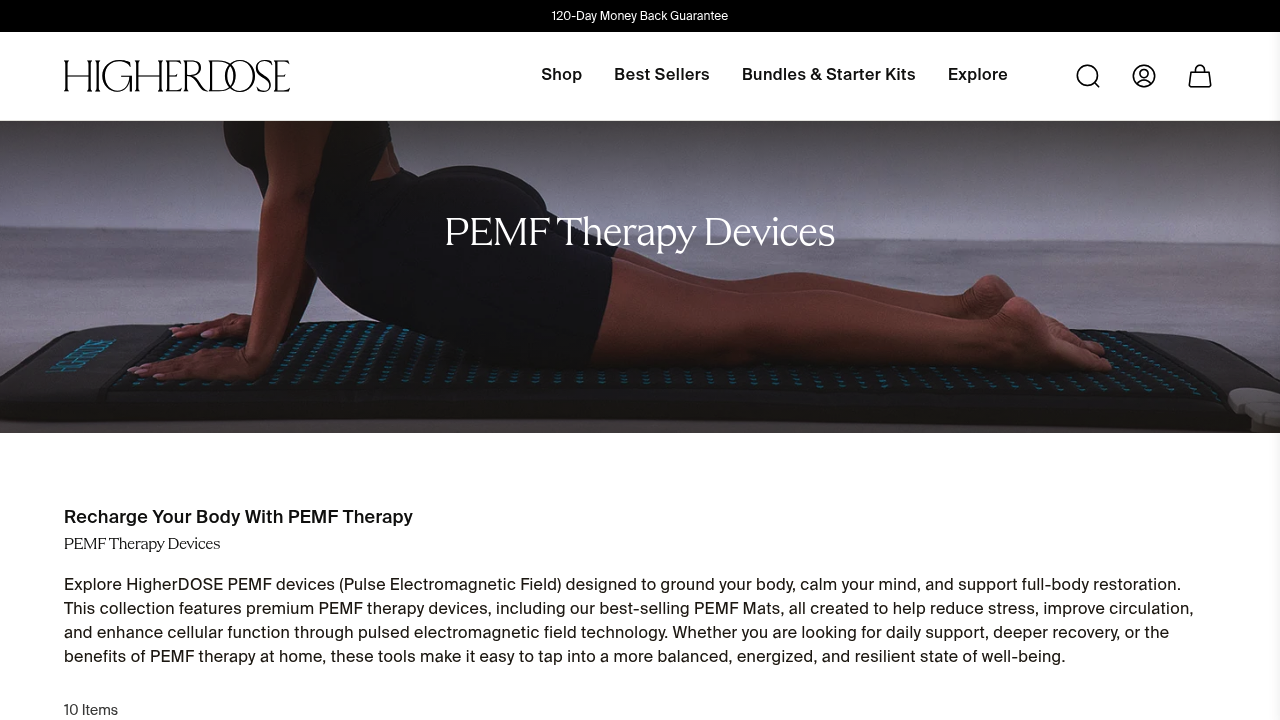
HigherDOSE, for example, currently gives its PEMF mats four settings ranging from 3 Hz to 23 Hz. Its lowest setting is 3 Hz and is marketed for deep sleep and recovery. The company recommends avoiding its higher 23 Hz setting before bed.
NeoRhythm takes the idea further. Its sleep program uses low-frequency PEMF and can be run before bed or, according to the manufacturer, for longer periods overnight.
That doesn't mean selecting 3 Hz on a mat automatically puts your brain into deep sleep.
A product setting named after a brainwave state is still a product setting. It isn't proof that your brain will respond exactly as the label suggests.
A sleep program and an insomnia treatment are not the same thing
This distinction matters.
If you occasionally have trouble winding down at night, you may be looking for something that makes your bedtime routine more relaxing.
That's very different from having chronic insomnia.
Insomnia disorder can involve persistent difficulty falling asleep, staying asleep or getting restorative sleep, along with daytime consequences. If that's happening regularly, it's worth discussing with a healthcare professional rather than assuming a wellness device will fix it.
A PEMF mat might still be something you're interested in using.
Just don't ask it to do the job of diagnosing why you're not sleeping.
Sleep can be disrupted by stress, medications, sleep apnea, restless legs, pain, hormonal changes, alcohol, caffeine, depression, anxiety and plenty of other things.
A $1,000 mat doesn't make those possibilities disappear.
HigherDOSE makes PEMF part of the bedtime ritual
If your idea of better sleep begins with relaxing before bed, HigherDOSE is probably one of the more obvious PEMF products to look at.
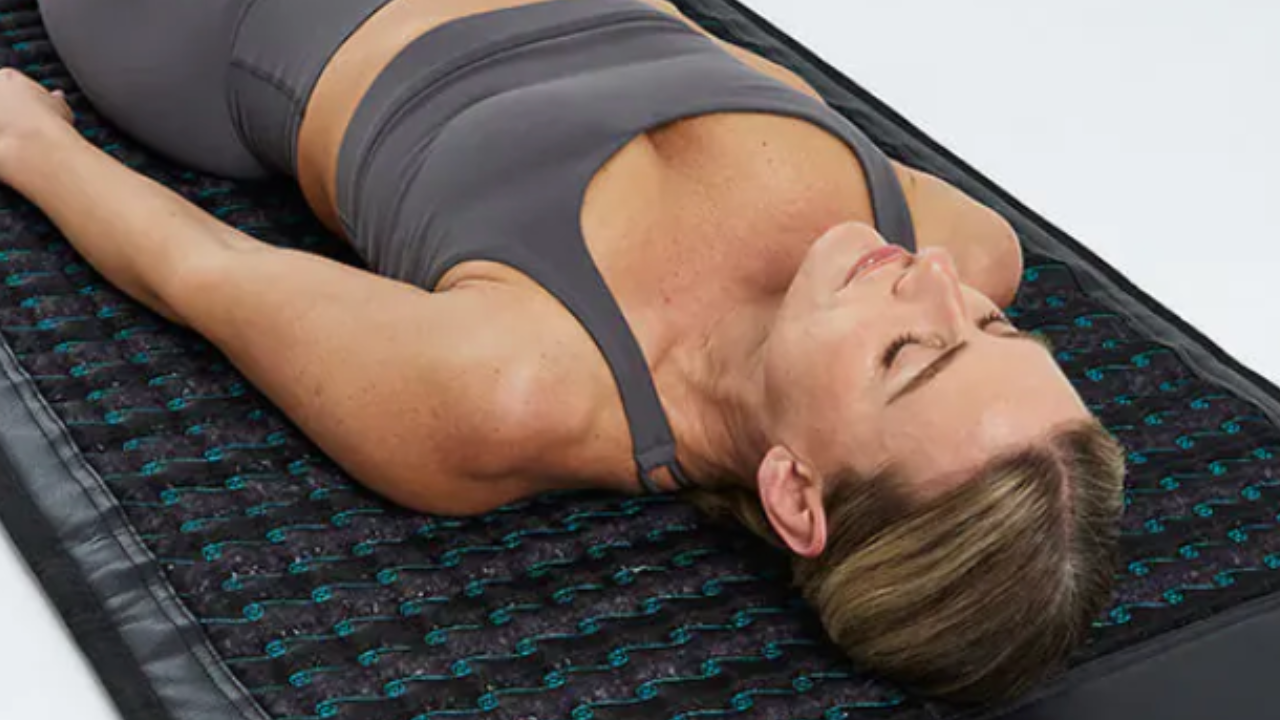
Its full-size Infrared PEMF Pro Mat currently costs $1,295 in the U.S. and combines PEMF with far-infrared heat. Its lowest PEMF setting is 3 Hz, which HigherDOSE positions specifically for sleep and recovery.
There's also a smaller Go Mat, currently $699, with the same four PEMF frequency levels and infrared heat in a half-size format.
The appeal isn't difficult to understand.
Put the mat somewhere comfortable. Turn on the heat. Choose the lower PEMF setting. Lie down for 20 minutes instead of scrolling through your phone.
Even without attributing every part of that experience to PEMF, that's a fairly pleasant wind-down routine.
And that's how we'd think about the product.
HigherDOSE makes claims about restful sleep and associates its 3 Hz setting with delta brainwaves. Those are manufacturer claims. The insomnia studies mentioned earlier did not test the HigherDOSE mat.
Read our full HigherDOSE PEMF review.
NeoRhythm takes a very different approach
NeoRhythm makes more sense if the part you're interested in is PEMF rather than the mat experience.
It's small and wearable. There's no heated full-body surface and no need to find six feet of floor space before bed.
The device includes sleep-oriented programs, and the manufacturer says its Improve Sleep program can be used before sleep or for extended periods overnight. Its published program guide lists 4 Hz as the dominant frequency for that particular program, accompanied by a lower 2.67 Hz frequency.
That gives you a much more portable way to experiment with low-frequency PEMF as part of your nighttime routine.
Again, the existence of a sleep program doesn't establish that NeoRhythm treats insomnia.
What it does give you is a PEMF product specifically designed with nighttime use in mind.
If you travel frequently or don't want a large mat, that may be far more practical than buying a full-body system.
Read our full OmniPEMF / NeoRhythm review.
Do you need to sleep on a PEMF mat?
No.
In fact, check the instructions before assuming you should.
Some PEMF products are designed for relatively short sessions. Others offer programs intended for longer use. Heated mats introduce another consideration because you also have the heat function to think about.
HigherDOSE's PEMF cycle, for example, runs for 20 minutes at a time. The company describes its mats as something you can use before sleep, rather than requiring you to spend the night on one.
NeoRhythm's manufacturer, on the other hand, provides an extended overnight option for its sleep program.
Follow the instructions for the device you actually own.
Don't assume that because one PEMF product can be used overnight, all of them can.
Heat may be part of why you like the mat
This is particularly relevant with HigherDOSE, HealthyLine, Grooni and other combination mats.
You're not experiencing PEMF in isolation.
You're lying on a warm surface. You're probably still. You may have turned the lights down. You're not answering email. Maybe you've stopped looking at your phone for twenty minutes.
All of those things change the experience.
If you get off the mat feeling relaxed and sleep beautifully that night, wonderful.
It doesn't necessarily tell you whether the PEMF, infrared heat, quiet time or combination of all three was responsible.
For most people using the mat at home, that may not matter very much.
If you're trying to decide whether to spend substantially more money specifically for PEMF, it matters quite a lot.
What about using PEMF when you wake up at 3 a.m.?
Possibly, depending on the device.
A small wearable or portable product is obviously easier to use in the middle of the night than getting out a large mat.
But I'd be cautious about turning a PEMF device into another thing you feel you have to do in order to sleep.
Anyone who's dealt with insomnia knows how quickly bedtime can become a performance.
Perfect temperature. Perfect pillow. Magnesium. White noise. Blackout curtains. Sleep tracker. No blue light. Breathing exercise. And now a PEMF program.
Suddenly you're lying awake wondering whether you've optimized sleep correctly.
A sleep product should make your routine easier, not give you another reason to worry about it.
If sleep is your main reason for buying PEMF, keep the decision simple
I'd look for three things.
First, is the device genuinely convenient at bedtime?
A full-body mat may be lovely if it stays set up. If you have to drag 40 pounds of equipment out of a closet every night, enthusiasm may fade quickly.
Second, does it have lower-frequency programs intended for nighttime use?
You don't necessarily need dozens of settings, but you do want to know what the device is actually producing and how the manufacturer intends it to be used.
Third, what else are you buying?
If you love infrared heat, HigherDOSE or another combination mat may make sense.
If you want PEMF without the heat and bulk, NeoRhythm is a very different proposition.
If you're already considering a more sophisticated system for several reasons and sleep is only one of them, products such as HAELO, iMRS or Spectra may belong in the conversation.
Don't buy the most expensive PEMF machine you can afford because you want to sleep better.
Buy the format you'll actually use.
Be especially skeptical of certainty
Sleep is irresistible territory for wellness marketing because almost everyone wants more of it.
That makes strong claims easy to sell.
There is legitimate research on pulsed magnetic therapy and insomnia, including randomized, placebo-controlled human trials. One fairly substantial 2023 trial produced encouraging results.
That's different from having strong evidence for every consumer device, every frequency program and every claim you'll encounter while shopping.
I'd be comfortable saying that PEMF and sleep is an area worth watching.
I'd also be comfortable trying a PEMF product as part of a relaxing bedtime routine if the device otherwise made sense for me.
I wouldn't buy one expecting it to cure insomnia.
If you're already interested in PEMF for other reasons, a sleep-oriented setting may be a useful feature to have. And if sleep is the main reason you're shopping, compare the HigherDOSE and NeoRhythm listings first. They approach nighttime PEMF very differently, which should make it easier to see which type of product fits the routine you actually want.