
PEMF Mat vs. PEMF Machine: What's the Difference?
PEMF Mat vs. PEMF Machine: What’s the Difference?
If you're shopping for PEMF equipment, you'll eventually run into a slightly ridiculous problem: nobody seems to agree on what to call it.
One company sells a PEMF mat. Another sells a PEMF machine. Another has a “system” that includes a mat. Then you'll find a $5,000 machine that also comes with a full-body mat.
So are PEMF mats and PEMF machines actually different?
Sometimes. But not in the neat way the names suggest.
A PEMF mat is really a type of applicator—the part you lie on that delivers the electromagnetic field across a larger area of the body. A “PEMF machine” is a much broader term. It may describe a controller connected to a mat, a targeted coil, a pad, a probe or several different applicators.
In other words, a PEMF machine can include a PEMF mat.
That distinction makes shopping much easier, because instead of worrying about what the manufacturer calls the product, you can look at how the equipment is actually designed.
What is a PEMF mat?
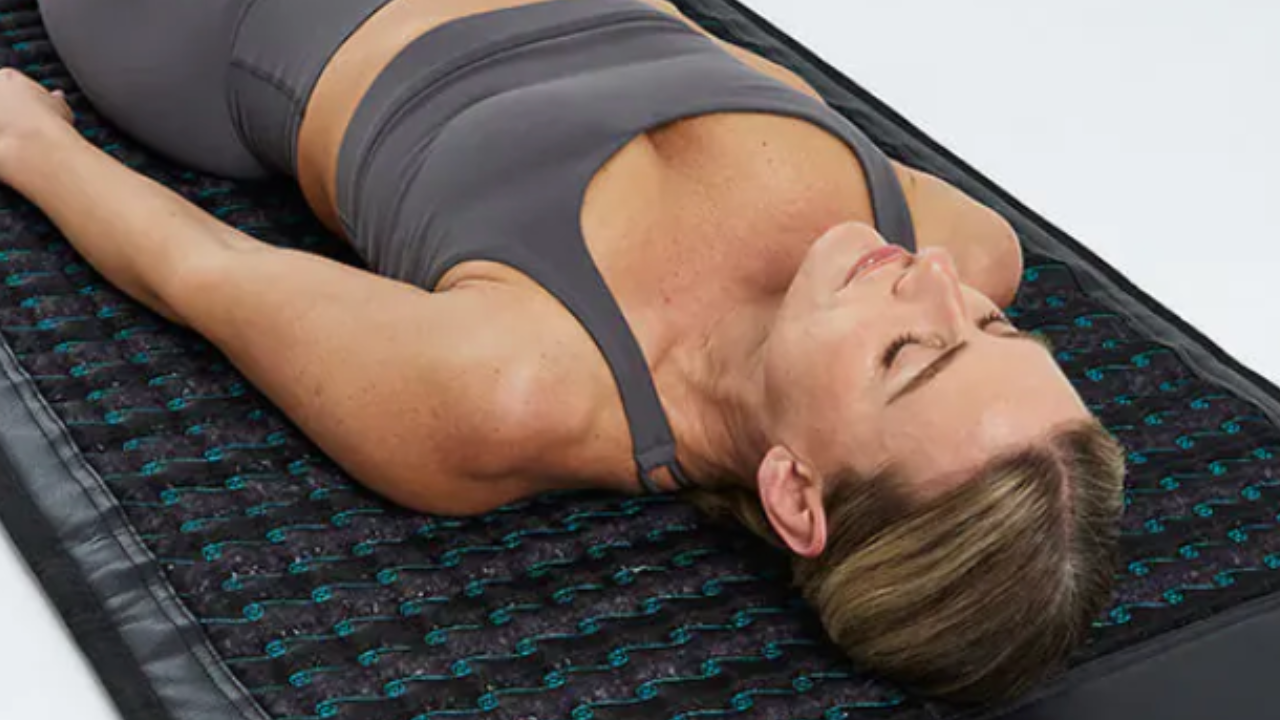
The easiest PEMF mats to recognize are the consumer models.
HigherDOSE, HealthyLine, Grooni and CurrentBody all sell versions of them. They look a little like thick yoga mats or padded mattress toppers, and you generally lie on them for a session.
Inside the mat are coils or other conductors that produce the pulsed electromagnetic field.
Many home PEMF mats also include far-infrared heat, and some add red light, gemstones or other wellness features.
The appeal is fairly obvious.
Lay the mat down, choose your settings and get on it.
You don't have to decide exactly where to position an applicator. You aren't moving a coil from your shoulder to your knee. A full-body mat gives you a large surface to use at once.
That simplicity is one reason mats have become such a big part of the home PEMF market.
What, then, is a PEMF machine?
This is where the terminology becomes less useful.
“PEMF machine” isn't one standardized product category.
It can describe something relatively compact and simple, or a sophisticated system with a separate control unit and several applicators.
Swiss Bionic's iMRS system is a good example. It includes a control unit, full-body mat, smaller pad and probe. The controller generates the signal; the different applicators let you use it in different ways.
Spectra takes another approach. Its Apex HSR is built around a three-section full-body system and separate controller, while the HSR Pro offers more channels, programming options and support for additional attachments.
HAELO doesn't use a traditional full-body mat at all. Its system has a console and a separate circular coil that you position where you want it.
All of these can reasonably be described as PEMF machines or systems.
They're just not the same kind of machine.
A mat doesn't automatically mean “basic”
This is an important distinction if you're comparing prices.
It's easy to assume:
Mat = simple home product
Machine = serious professional equipment
The market doesn't divide that neatly.
Some inexpensive PEMF products are mats.
Some expensive PEMF systems also use mats.
And a mat can be one component of a much larger system.
Spectra's Apex HSR, for example, currently starts at several thousand dollars and still gives you full-body PEMF through its three-cushion design. Swiss Bionic's iMRS systems combine a whole-body mat with smaller applicators.
So don't dismiss a product because it's called a mat—or assume another product is more sophisticated simply because the manufacturer calls it a machine.
Look at what comes in the box.
The real difference is how you want to use PEMF
Forget the names for a moment.
Imagine two setups.
With the first, you put a mat on your bed or floor, lie down and use PEMF across a large area without doing much else.
With the second, you have a controller and smaller applicator. You place the applicator around the area you're interested in, run the session and move it when needed.
Those are genuinely different experiences.
Neither one is automatically better.
Full-body mats make sense when you want convenience
A full-body mat is hard to beat for simplicity.
You don't have to decide where the PEMF should go. You don't have to hold anything. Once you're lying down, the mat stays where it is.
That can make a mat easier to turn into a routine.
If you already spend 20 or 30 minutes reading before bed, for example, lying on a mat may fit into your life fairly naturally.
The downside is size.
Full-body mats need somewhere to go. Some are heavy. If yours contains layers of gemstones and heating elements, it may not be something you casually fold into a handbag.
Before buying one, think about where you're actually going to keep it.
That sounds almost embarrassingly practical until you've spent $1,300 on a mat that lives behind the bedroom door.
Smaller applicators give you more flexibility
A targeted applicator solves a different problem.
Instead of lying on a large surface, you put the applicator where you want it.
That may be more convenient if your interest is one particular area or if you want equipment that's easier to move around.
HAELO's separate coil is one example.
The iMRS system goes further by providing different applicators for different types of use. Its whole-body mat gives you broad coverage, while the smaller pad and probe give you other options.
This kind of system can be more versatile.
It's also more equipment.
If your idea of using PEMF is simply lying down and relaxing, you may never take advantage of all that flexibility.
What about portable PEMF devices?
There's a third category worth mentioning because it makes the mat-versus-machine question even less useful.
Some PEMF devices are neither.
OmniPEMF's NeoRhythm, for example, is a small wearable device. There are also portable pads, wraps and compact applicators from other manufacturers.
These sacrifice the large surface of a full-body mat for something that's easier to carry and position.
If you travel frequently, have very little storage space or simply don't want a large piece of wellness equipment in your house, that's worth considering before you buy either a traditional mat or a larger machine.
A portable device isn't a “less serious” version of a mat just because it's smaller.
It's a different format.
Are PEMF machines stronger than mats?
Sometimes, but don't assume they are.
Professional and targeted PEMF systems can offer substantially higher intensities than some consumer wellness mats. But the word machine itself tells you nothing about intensity.
Likewise, the word mat doesn't tell you whether a product is low intensity.
You need to look at the actual specifications.
And even then, be careful about turning “stronger” into “better.”
A machine capable of producing a stronger magnetic field doesn't automatically produce a better result for every use. PEMF research uses different intensities, frequencies, waveforms and treatment protocols depending on what researchers are studying.
If a company wants you to believe its machine is better because its gauss number is bigger, we'd want more evidence than the number itself.
Mats often come with more than PEMF
This can make the comparison even harder.
HigherDOSE's Pro Mat combines PEMF with far-infrared heat.
Grooni does the same and offers a 4-in-1 model that adds red light.
HealthyLine has an extensive range combining PEMF with infrared heat and other technologies.
CurrentBody's PEMF mat is also heavily built around infrared heat.
If you like heat, these products can be very appealing.
But if you're specifically shopping for PEMF, separate the features in your head.
Ask yourself whether you'd still want that $1,200 mat without the gemstones, infrared heat or red light.
If the answer is yes, look closely at the PEMF specifications.
If the answer is no, you may actually be shopping for a broader wellness mat—and that's fine too.
Machines tend to offer more room to grow
One advantage of a modular PEMF system is that you're not necessarily locked into one applicator.
A system may let you use a full-body mat one day and a smaller applicator another.
That can matter if you're spending several thousand dollars and expect to use the equipment for years.
It's particularly relevant for professional buyers.
A practitioner may want a full-body option for one client and a smaller applicator for another. They may also care about having more control over programming than the average home user needs.
For a person buying PEMF for the bedroom, those features may be overkill.
Don't pay professional-equipment prices simply because professional equipment sounds more impressive.
There's also a big difference in price
A basic PEMF mat or portable device can start in the few-hundred-dollar range.
Premium consumer mats commonly move into four figures.
More sophisticated home PEMF systems can cost several thousand dollars.
Professional equipment can reach $10,000, $20,000 or more.
We've broken those ranges down separately in our guide to how much PEMF machines cost, because the sticker price makes much more sense once you know which type of equipment you're looking at.
The important part is not to compare products from completely different categories and conclude that the expensive one must be better.
A $400 portable device isn't trying to be a $15,000 professional system.
And most people shopping for their home don't need it to be.
Which one should you buy?
For most people, the decision starts with routine rather than specifications.
If you want to lie down and use PEMF across a large area, start with mats.
HigherDOSE is worth looking at if you want something relatively simple. HealthyLine and Healthy Wave make more sense if you want a wider range of options. Grooni gives you several sizes and formats without an enormous catalogue.
If you want more flexibility from one system, look at equipment that combines a controller with multiple applicators. Swiss Bionic/iMRS is a good example.
If you want a substantial system without a full-body mat, HAELO's separate coil takes a different approach.
If you want portable or wearable PEMF, start with devices such as NeoRhythm rather than trying to make a full-body mat portable.
And if you're buying equipment for a clinic or wellness business, your requirements change enough that we'd start with our guide to professional PEMF machines instead.
Don't buy the label
This may be the easiest rule to remember.
“PEMF machine” sounds more substantial than “PEMF mat.”
That doesn't make it better.
A mat tells you something useful about the product's physical format. “Machine” often tells you very little until you look at the controller, applicators and specifications.
Figure out how much of your body you want to cover at once. Decide whether you want something that stays in one place or moves around. Think about how much control you actually want over the PEMF settings.
Then look at the products that fit.
You may end up with a $700 mat.
You may end up with a $5,000 system.
But at least you'll know why you're paying the difference.